
The culture of violence in the U.S.
Published by marco on
Glenn Greenwald’s analysis of the shooting of Renee Nicole Good is nearly 30 minutes and it’s all 100% worth watching. It’s a very well-thought-through and well-presented analysis of the culture of violence in the U.S.[1]
Minneapolis ICE Shooting: Glenn Shares His Thoughts by Glenn Greenwald (YouTube)
Glenn discusses the sickness of a society that cheers violence, that celebrates death. He begins by talking about Renee Nicole Good’s utterly senseless death, which, for the sake of argument, we won’t even call an alleged murder, because nothing has been officially alleged yet. He compares the right’s celebratory reaction—Fuck around and Find out! Talk shit, get hit!—to the reactions of very online people after Charlie Kirk was murdered just a few months ago.
He notes that one difference between the incidents is, that those who trashed Charlie Kirk were nearly entirely online, and nearly entirely insignificant in terms of actual power. In the case of Ms. Good, the reprehensible lying and celebratory comments come from the very top and goes right down the ladder.
Glenn discusses the attitude toward violence in the U.S., in general, using the example of when the U.S. extra-judicially executed Osama bin Laden, sending people into the streets to celebrate in writhing ecstasy. Other peoples in other countries that don’t share U.S. bloodlust looked at this and wondered: what kind of demons are U.S. citizens, to be celebrating the violent death of a person?
The reason is anything but war
This made me think of my own youth in that country, where the won’t-someone-please-think-of-the-children crowd kept searching about for a reason as to why young people seemed to be so violent. They blamed rock music, then heavy-metal music, then rap … just music by non-whites, by non-mainstream, by anyone with an unwelcome political opinion. Look at the lyrics to so much heavy-metal and rap music: the sound is violent but the lyrics are often anti-war and anti-imperialism. I found out afterward that much of the metal I listened to was anti-Vietnam.
Once video games became good enough to mimic reality reasonably well, those became the next target. Obviously violent video games breed violence. But they were, of course, disingenuous, because they were never going to look within, to see the culture of hate, division, and alienation that the U.S. pounds into everyone’s head. They wouldn’t look to the military budget that’s larger than the next 10 nations combined. They wouldn’t look at anything that flowed money into their own coffers.
Anyway, that’s just my additional thoughts. Glenn didn’t talk about blaming music or video games for violence in the U.S. but he did discuss the deliberate alienation in the culture.
What about January 6th?
Finally, Glenn talked about the January 6th riot. He continues to maintain that it wasn’t even close to a viable insurrection—I agree; they had no plan; it grew organically; the functioning of the state was never in any danger whatsoever—but that’s not the point he was making. What he said was that, if people support the State’s being able to mow down a woman for disobeying orders—even if they were conflicting or unjustified orders),—then the capitol police would have been justified in killing dozens, if not hundreds, of people on that day in January, instead of just Ashli Babbitt.
But people decide whether they consider violence to be justified based on their personal politics, which leads them to espouse wildly perverted and hypocritical opinions. They’ll defend to their death the full pardons granted to everyone involved in January 6th.
Some of those people had committed serious crimes; some of them had gotten railroaded into sentences that were far too long for what they’d done. Railroading is the kind of justice most people in the U.S. of A. have known for a long, long time. We only notice when that kind of stuff starts to affect people who are more like us.
But, still, that’s not why so many people thought they should be pardoned. They have this base feeling that most of those people were there protesting what they perceived to be injustice. They shared that feeling, so that protest was justified. They didn’t see how dangerous it got; they didn’t see the danger posed by some participants. It wasn’t an insurrection but it did turn into a dangerous riot that damaged government—i.e., the people’s—property, and some of that property was quite sacred to U.S. institutions.
Ok, the heroes we’re talking about manage to convince themselves that the Jan. 6th protestors—who actually rioted, who actually broke into a government building—were treated unjustly. One protester was killed, and she was shot while crawling, armed, through a windows she’d smashed through in a door in the interior of the building. I’m not going to litigate this particular instance because I don’t know more than those details—and even those might be wrong, if I’m honest—but to illustrate that, at a minimum, Babbitt was unequivocally more engaged in active resistance—domestic terrorism!—than someone like Renee Nicole Good.
But these heroes are also 100% convinced that a suburban mother—who was in her own car, in her own neighborhood, and driving at below walking pace—has to know and understand how to follow orders in a tense situation on a suburban street in America. They think that the burden of remaining calm is on the non-professional person. They think that the person with the gun is justified in being on the hair-trigger of fearing for his life and, should he assassinate someone, he should suffer absolutely no consequences for it. He shouldn’t even lose his job.
This is the madness and deep sickness of too many people in U.S. society. They celebrate death and murder like savages. Or demons.
Don’t trust your lyin’ eyes
The article Think You Saw State-Sanctioned Murder? You Failed Media’s ‘Rorschach Test’ by Janine Jackson (ZNetwork) writes,
“In the 13th paragraph, we get the mayor of Minneapolis: “Frey said of the self-defense explanation, ‘Having seen the video myself, I want to tell everybody that is bullshit.’”
“Did the NPR reporters see the video themselves? Can they tell us whether or not this is bullshit? How exactly do they define the job of reporting?”
“That piece explained that you can’t really know what you saw, or what it means, because “in a polarized country, high-ranking officials were offering definitive, and starkly contrasting, accounts long before the facts could be established.”
“The Times sees its role as telling you that whether or not you believe Renee Good deserved to be murdered depends on whether you’re a Democrat or a Republican.”
HasanAbi does the work
Here’s a short video with examples of hateful, hateful people but also those who are deeply thankful to HasanAbi for having shown them the error of their ways.
'my loved ones would never get shot by ICE' by HasanAbi (YouTube)
The title says it all: this is, deep down, how people think. It won’t happen to me.
Historical analogues
Martin Niemöller covered all of this already, back in 1946 with his poem First They Came (Wikipedia) that starts out,
“First they came for the Communists
And I did not speak out
Because I was not a Communist“[…]”
Look it up if you don’t believe me (or look at the German version below), but the stanza about the Jews is last in the list. The poem talks about the Germans having come for the communists, socialists, and trade unionists first.
Unsurprisingly, the United States Holocaust Memorial Museum skips the first stanza because fuck communists, that’s why. I would not be surprised to hear that they’ve also elided the second and third stanzas by now, leaving just two stanzas, with the oppression of the Jews leading off a much, much shorter poem.
There is no German version of the Wikipedia page but the English-language version includes the whole poem in German.
“Als die Nazis die Kommunisten holten,
habe ich geschwiegen; ich war ja kein Kommunist.“Als sie die Gewerkschafter holten, habe ich geschwiegen;
ich war ja kein Gewerkschafter.“Als sie die Sozialdemokraten einsperrten, habe ich geschwiegen;
ich war ja kein Sozialdemokrat.“Als sie die Juden einsperrten, habe ich geschwiegen;
ich war ja kein Jude.“Als sie mich holten, gab es keinen mehr, der protestieren konnte.”
The umbrella is shrinking
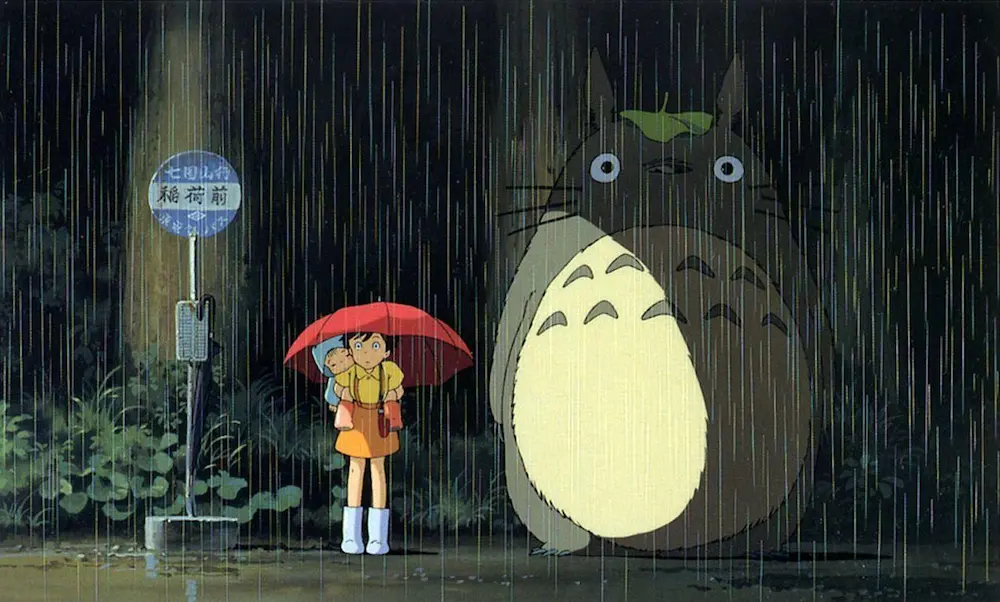
I only recently realized that a metaphor that I’d been using for what seems to be happening to people who have been historically untouched by the vagaries and violence of empire—that “the umbrella is shrinking”—is just a more visual metaphor of what the poem was saying.
I think of what’s been happening over the last ten years, but perhaps more in the last year, is that the “umbrella is shrinking” and “more people are getting wet” who hadn’t been out in the rain before. Some of them are just noticing that they’re getting drops on their sleeves. But that’s never happened before. The billionaires and other elites are shrinking the umbrella. You’re not in the club anymore.
[1]
I recently saw the ridiculously titled post How Russia’s Children Got So Violent by Jason Kottke, which wrote,
“How Russia’s Children Got So Violent. “There is no positive ideology for children in a country fighting a murderous war.” Ultranationalist & xenophobic violence is encouraged by Putin’s regime.”
The original link is to an article in the Atlantic, which I am absolutely not going to read, because there is no way that I would be able to get through it without having an aneurysm caused by the author’s inability to detect any irony in reporting on something like violence engendered in other countries by their wars from the heart of the most violent empire the world has ever seen, which has been at war as long as I can remember. Kottke doesn’t seem to have noticed the irony either, which is completely unsurprising.
↩