
Links and Notes for January 30th, 2026
Below are links to articles, highlighted passages[1], and occasional annotations[2] for the week ending on the date in the title, enriching the raw data from Instapaper Likes and Twitter. They are intentionally succinct, else they’d be articles and probably end up in the gigantic backlog of unpublished drafts. YMMV.
[1] Emphases are added, unless otherwise noted.↩
[2] Annotations are only lightly edited and are largely contemporaneous.↩
Table of Contents
- Public Policy & Politics
- Journalism & Media
- Labor
- Economy & Finance
- Science & Nature
- Environment & Climate Change
- Art, Literature, Music, & Cinema
- Philosophy, Sociology, & Culture
- Technology & Engineering
- LLMs & AI
- Programming
- Design
- Sports
- Fun
Public Policy & Politics
An Authoritarian Capitalist Oligarchy Naturally Concluding as a Fascist Police State (Reddit)
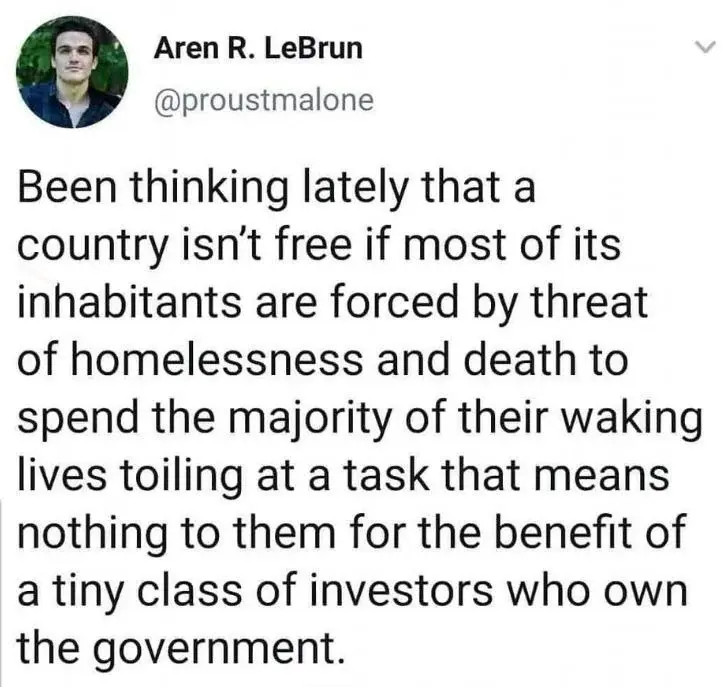
“Been thinking lately that a country isn’t free if most of its inhabitants are forced by threat of homelessness and death to spend the majority of their waking lives toiling at a task that means nothing to them for the benefit of a tiny class of investors who own the government.”
Reforming ICE & The Police State Is Like Punching Waves — There’s Only 1 Answer by Lee Camp (Substack)
“Here in the United States we want our “law enforcement” to be killers. We want big, dumb meatheads with zero accountability and even less diplomacy. We want them to have itchy trigger fingers and the interpersonal skills of potted plants. We want them looking and acting like defensive linemen with badges, guns and daddy issues.”
“About 22% of US police and 32% of ICE agents were once in our imperial military. They learned the tactics. They learned the belief system. They learned the framework. They were effectively indoctrinated by some of the best indoctrinators the world has ever seen. Any sort of moral core or human emotion was carefully and strategically beaten out of them. And the ones who hopelessly clung to some remnant of concern for their victims didn’t decide to join domestic law enforcement when they got home. Basically those who don’t become sociopaths aren’t the ones now walking the streets as cops.”
“As former vice presidential candidate Ajamu Baraka said:”“What we are witnessing in the United States today is not a series of isolated policy excesses or unfortunate ‘overreaches,’ but the maturation of a coherent architecture of repression — a national security state that fuses intelligence, policing, militarization, and ideological discipline into a single system of control.”
Ceding the Future to China by Pascal Lottaz | Ambassador Chas W. Freeman, Jr. (Substack)
“China has successfully returned to wealth and power. But there is little evidence that, in doing so, the Chinese have sought anything other than their own enrichment, international respect, national unity, and reassurance against renewed subjugation by foreigners. We Americans nonetheless fear our eclipse. Our fears are augmented by our lapse into xenophobia and authoritarianism.”
“As Hannah Arendt so presciently explained,”“Authoritarians arise when economic, social, political, or religious change makes members of a formerly powerful group feel as though they have been left behind. Their frustration makes them vulnerable to leaders who promise to make them dominant again. A strongman downplays the real conditions that have created their problems and tells them that the only reason they have been dispossessed is that enemies have cheated them of power.”
People should be embarrassed to be so cheap and predictable. And yet…
“We Americans once insisted, as the Chinese do now, that we would never emulate Great Britain’s imperious dominance of world affairs. Then we did. At present, the Chinese shrink from replacing us in leading the causes and institutions we have ceased to lead or outright abandoned, like climate change, official development assistance, setting the rules for international trade and investment, or countering nuclear proliferation. But like us, the Chinese will surely have regional and global leadership thrust upon them. We cannot know whether they will eventually follow us into our current experimentation with global despotism.”
“China tries hard to be inoffensive. Beijing practices strategic neutrality. It keeps its commitments limited, its ideology both idiosyncratic and vague, and its ambitions restrained. It makes itself available as a conciliator but avoids entangling itself in foreign quarrels. It does not seek to impose its political system or ideas on others.”
“China now leads the world in the production of intellectual property and innovation in almost every field of science, technology, engineering, and mathematics.”
“China now has the world’s largest and most widespread diplomatic presence abroad. It is also the most prominent member of new institutions that complement and expand the purposes and programs of those the United States sponsored after World War II.”
“We have abandoned reliance on diplomacy as a means of threat reduction or an alternative to economic and military warfare that can achieve adjustments in our relations with other nations or groups of nations.”
“We have adopted visa and other policies that discourage Asians from visiting, studying, working, or investing in our country. Strategic abdication and self-isolation are not effective responses to shifting balances of regional and global power.”
“We have withdrawn from or are sabotaging the institutions we created to promote and regulate global cooperation and commerce, substituting for them unilateral American attempts to exercise dominance coercively through economic warfare, punitive tariffs and sanctions, extortion, the operation of a protection racket involving the expropriation of foreign real estate and resources, and the lawless use of force. We are now seen as cruel and profiteering rather than caring.”
“An authoritarian, caprice-based order is no substitute for one based on the predictable foundation of international law. Ego-driven petulance is no substitute for strategy. Protection rackets and cronyism are no substitute for diplomacy. Intemperate insults do not promote partnership. Disregard for the sovereignty of others enrages them and disincentivizes their cooperation. It is generally considered wise to divide, not unite one’s adversaries. We have done the opposite.”
“The challenge is to create substitutes for the growing number of institutions the United States now shuns or blocks. Doing so requires resorting to ad hoc conferences and gatherings to address planetwide issues that the United States officially denies exist and won’t allow international organizations to address.”
“The European Union (EU) lacks the institutional capabilities, unified Weltanschauung, resolve, and steadfastness needed to pursue either strategic or tactical objectives effectively. It has many of the attributes of a geoeconomic superpower but seems determined to remain less than the sum of its parts and thus politically impotent. Having invented modern statecraft, it has forgotten how to practice it.”
“Europe’s malaise and declining competitiveness will not be restored by the weird combination of austerity, rearmament, and embargo of Russian natural resources most of its governments have adopted. No European has come up with a coherent response to deteriorating transatlantic relations, Russian advances in Ukraine, energy insecurity, China’s increasing technological prowess, or the emergence of a world order no longer centered on the West. In short, Europe is adrift. No one can now confidently predict Europe’s future geoeconomic role or geopolitical orientation.”
“Will Latin America accept a return to lawless U.S. overlordship of the sort that we seem to be pursuing? How do we propose to deal with the countries of Africa as they rise in demographic and economic weight in association with China, Arab states, Brazil, India, Russia, Türkiye, and other resurgent powers? Are we capable of minding our own affairs? Is building barriers to cooperation with other countries a feasible way to do so?”
“After all, we are currently engaged in a strange version of self-containment, retreating politically and economically while uniting allies, friends, and foes against us. Our media curate reality rather than reporting it. Our government is systematically stripping itself of expertise and competence.”
“Negative population growth plus steady economic growth and gains in productivity foretell higher per capita incomes for the Chinese people. Most Chinese do not share our distaste for their political system. Unlike us, China is not at war with other countries. It may yet be able to conclude its civil war through shows of force – assimilating Taiwan by making the island an offer it cannot refuse rather than through outright warfare. We better hope so. Our current mindless drive toward war with China over Taiwan can end only in tragedy for all concerned.”
“The fact is that the United States does not have a plan for dealing with the most probable scenario before us – a world in which China has returned to the preeminence of past millennia. We need to conceptualize one. This means we must nurture a realistic understanding of China and the Chinese, not indulge in spurious reasoning by analogies.”
“We are now led by “China hawks” who have never been to China or studied it but who are convinced they know everything they need to know about it.”
“We had better come up with a way to coexist with the Chinese, leverage their rising prosperity and technological competence to our own, and reduce the danger of pointless confrontation with them. Such confrontation promises to be catastrophic for us as well as for them.”
Trump’s New National Security Memo Is 30 Pages of Insanity by Sebastiaan Faber and Álvaro Guzmán Bastida, Greg Grandin (Jacobin)
“The document identifies China as the main economic competitor, especially in Latin America; it situates Latin America as a zone of contest in which the United States is going to push back China. But it does not identify China as a cultural enemy. That role is reserved for the low-birth-rate white people, women who don’t want to have babies, and the mongrels coming from the south.”
“I always get a little hung up on these typological questions because the United States has been operating in a state of emergency since its inception. There have been more than fifty since the country’s founding. But of course, every single war is a state of emergency. And every false-flag operation, from the Gulf of Tonkin to Mexico in 1846 or Cuba in 1898, has been a Reichstag Fire in its own way — with the difference that they’ve been directed toward expansion rather than domestic repression. Talking about fascism in the United States is complicated because, as Corey Robin argued some years ago, authoritarianism here functions through the institutions that liberals are saying we have to defend. It’s a profoundly minoritarian government in which the most repressive acts have been legitimized through the court system and through the electoral system.
“The problem with the fascism debate during Trump’s first term was that it served to obscure the role of the Democratic Party in laying the groundwork for the collapse of the neoliberal order that led to such disaffection.”
Inside, The Valley Sings by Nathan Fagan & Natasza Cetner (Vimeo)
This is a fifteen-minute video of rotoscoped animations of prisoners and prisons, with a voiceover by multiple prisoners. They explain their lives inside. The first explains that he was sentenced to 34 years in prison at 16 years old. He lived in Angola prison in Louisiana.
Another “spent 22 years and 36 days total in solitary confinement.”.
Later, he said,
“When they came to take me out of the cell… My vocal cords had gotten so weak from so long not talking to anybody I was semi-catatonic. I didn’t have a mirror in that cell. I went in there in my thirties and I didn’t come out until I was 58. And when I saw myself, I cried. I had gotten old. I fought all those years to stay alive. For what? I would kill someone before I would put them in a cell like that. That would be so much more humane.
“With my words, if I’m able to enable you to feel something that I feel, then maybe you’ll know there’s real truth to what I say. This punishment does destroy: Minds, hearts and souls. It robs you of hope, which is the essential need to carry on with life.”
I am at a loss for words. The U.N. considers it a human-rights violation to keep anyone in solitary confinement for longer than two weeks. This duration is based on the scientific evidence of myriad sociological and psychological studies. Anything more causes irreparable harm.
This is what the U.S. of A. does to its own citizens. Imagine how little it cares for the lives of those who aren’t even U.S.-Americans.
Oh, wait. They don’t really care about U.S.-American lives either.
This is your tax dollars at work, running the world’s longest, most inhumane experiment, while simultaneously masquerading as beacon of hope and democracy, an ideal of the moral high ground.
At the end of the film it writes,
“Among Western industrialized nations, the United States is the only country to make extensive use of long-term solitary confinement.
“A recent report states there are more than 122,000 men, women and children being held in some form of solitary confinement in U.S prisons on any given day.”
Iran Killed A MILLION Protesters! (Or maybe not) by Lee Camp (Truth & Freedom)
“Look, I’m not saying the Iranian government has not killed any protesters. But I am saying the US destroyed the economy of Iran, helped create the protests, funded and armed protesters, then put out fake numbers from CIA-backed orgs saying a billion protesters were killed. Now the US wants to use those fake numbers to bomb Iran and plunge tens of millions of people into a living hell.
“The empire’s playbook is not new. Once you’ve read it, you’ll know what’s actually happening every time it happens — Over and over and over and over again.”
Please Understand That Nothing Will Be Done About The Epstein Files by Caitlin Johnstone (Substack)
“That’s the only positive change that might come out of all this. Our rulers won’t do anything to help right the wrongs, but the people might become a bit more ready and willing to overthrow our rulers.
“That’s the only way health and humanity is going to win this one. By waking up to reality one pair of eyelids at a time and realizing that the reason everything is fucked is because we live under a fucked up system which elevates fucked up people, and we’re not going to have a healthy world until we abolish the fucked up system that put the fucked up people in power.”
Journalism & Media
The Press Is the Government’s Enemy and That Is Good by Hamilton Nolan (How Things Work)
“Donald Trump believes that if a reporter says something he doesn’t like, they should get the death penalty. You think I’m joking? I’m not joking. This characteristic of his was apparent a full decade ago, when he began pointing to the press pen at every one of his campaign rallies and spewing insults at them in order to, hopefully, rile up his some of his fans enough to take a swing at somebody. Donald Trump is not “hostile to” the First Amendment; he would erase it if he were able to, and the Republicans in Congress would go along with him. In his second and less restrained term as President, the White House press corps has been filled with right wing internet influencers and the entire Defense Department press corps has been replaced with administration sycophants. The courts are the only thing keeping the First Amendment alive today in America. That is where we are.”
“[…] To the government, there is no difference between the protesters and the reporters. They are all enemies. They are all barriers to the government’s ability to carry out its wishes, and therefore they will all be treated the same. The tear gas and rubber bullets that federal agents are firing at the crowds in Minneapolis and Portland and elsewhere do not discriminate according to job. Nor does the US Justice Department now. The executive branch is authoritarian; it wants its wishes to automatically be law; it has declared all of its opponents to be domestic terrorists; reporters, who tend to detract from the government’s power by showing all of the bad stuff it does to the public, are opponents just like anyone else. Any reporters who have spent their careers imagining that they exist on a separate plane from the simplistic partisans who protest in the streets will be able to rethink those assumptions from inside a jail cell. We’ll all be in there together.”
“Georgia Fort is, like me and a lot of my peers, an independent journalist. Why are we all so damned independent? Because most of the normal newsroom jobs that we all would have had a generation ago have disappeared thanks to the ability of big tech companies to suck all of the profits out of our industry. The profits that used to employ thousands of journalists have instead made the founders of these tech companies very, very rich.”
“[…] the job of journalism is much simpler. Journalism is supposed to tell the truth. The reason why the press finds itself the enemy of the government is that the government is (even more than usual) hostile to the truth. For journalists, there is no triangulating out of this predicament. The only choices are to keep telling the truth or not. As the next few years unfold, it will not be hard to see who is making which choice.
“Rely on your objectivity to protect you from the feds if you want but I’m bringing a fucking gas mask.”
ELON MUSK BEGGED TO GO TO EPSTEIN'S ISLAND by HasanAbi (YouTube)
Excellent meta-level analysis of the utter corruption of the ruling class.
The Western Press Are Trying To Spin Epstein As A RUSSIAN Agent by Caitlin Johnstone (Substack)
“[…] they’re presently trying to spin Epstein as a Russian agent. The mass media do not exist to report verified news stories, they exist to promote the information interests of the western empire and the oligarchs who steer it.
“It certainly does not serve the interests of the oligarchs and empire managers to have people reading the Epstein files with the view that he was an Israeli operative conducting his abuses and manipulations at the highest levels of society with the blessings of the western intelligence cartel. So of course they’re scrambling to make it about Russia.”
Labor
We All Need to Have a Serious Conversation About Revolution by Nicky Reid (Exile in Happy Valley)
“Well, it’s official dearest motherfuckers, America has become the world’s largest third world dictatorship. If the first two months of 2026 don’t prove this to you with flying colors than I’m terrified to ask what will. Since Christmas, Donald Trump has been swinging the Executive Office high above his head like some sick orange Gogo Yubari with a White House shaped meteor hammer, decapitating everything in sight.
“He has kidnapped another nation’s strongman and held what’s left of his regime hostage for their entire oil industry like some God sized Baby Face Nelson. He has bluntly demanded that Europe hand over Greenland like a lunchroom dessert and threatened to just run it over with his bike if they refuse.
“He has also turned an entire department of the federal government into his own private paramilitario that raids American cities like masked Mongol hordes and leaves poorly trained, twenty-year old trolls to police the streets with machine guns and videogame sadism.”
“At some point we all have to address the colossal elephant in the room. That which is unspeakable in politically correct quarters. At some point somebody has to say the word ‘revolution’ and I’m not talking about some commie-scented air-freshener for a champaign socialist candidacy in SOHO. I am talking in no uncertain terms about all of us putting our partisan tribalism aside and doing what I think we all know needs to be done. I am talking about having a serious and ongoing conversation about overthrowing the government of the United States of America.
“I know, we could all go on some Palantir kill list just for thinking such heresy out loud but at the end of the day there is no polite way to do this. Our government is fucking evil and it needs to go.”
“And the general strike can be taken to the next level with a mass unarmed occupation of the location of the seat of power itself. This was attempted with the anti-Vietnam war protests of May Day 1971 in which about 15,000 protestors flooded the streets of Washington DC, blocking major intersections and bridges under the slogan “If the government won’t stop the war, we’ll stop the government.”
“Most modern historians now claim it failed to achieve anything other than affecting the largest arrest for civil disobedience in US history with local, state, and federal officers dragging away over 12,000 shaggy haired participants. However, then-CIA Director Richard Helms has admitted that the spectacle delivered a devastating blow to the Nixon Administration’s credibility, softening them up for the upheaval of Watergate, and we now know that similar protests led by GIs in barracks across the globe inspired the Pentagon to pull the plug on Vietnam less than two years later.”
“More recently, we also saw how easy it was for Donald Trump to manipulate a pack of poorly armed diabetic boomers to take the Capitol on January 6. I’ve long joked that if that mutiny were thrown by a bunch of anarchists, they would still be smoking dope and playing hacky sack in the Capitol Hill Autonomous Zone as we speak.”
“America itself is a construct that is inherently unsustainable as well as inherently incompatible with democracy as anything but an empty slogan to commit war crimes under. The leviathan must be broken down into autonomous sized pieces, into self-sustaining communes, collectives, and polities. The American people will never truly know freedom until they accept these basic facts and begin building real existing democracies within the shell of Ozymandias. That way, once that colossus finally is overthrown, there won’t even be a need to replace it. A thousand little democracies will already be there ready to bloom through the cracks of the ruins.
“And that is true revolution, dearest motherfuckers, we may just need to remove another Czar to give us a little more time to build it under weaker despots and that is the dangerous conversation I am attempting to start right now.”
Economy & Finance
 Their greatest innovation has been stealing our data to sell us ads
“how fucking stupid is it that we have all these supposed billionaire geniuses running around and their greatest innovation of our lifetime has been stealing all our data to sell us ads.”
Issue 100 – Freedom of all kinds is worth fighting for by Molly White (Citation Needed)
“In 2022, they were incensed when Canadian authorities froze bank accounts belonging to truckers protesting vaccine mandates (and delighted for the opportunity to promote crypto as an alternative funding mechanism) — but now, when ICE agents murder bystanders and invent pretexts that footage shows are false, where is the righteous outcry against state violence towards those exercising their right to protest? The answer, of course, is that they never actually cared about these principles at all. Anyone who believed they did was dangerously naive. These were marketing slogans and talking points, deployed when convenient to ward off regulation and burnish crypto’s reputation, discarded the moment they might conflict with business interests.”
“This would certainly not the first time a major firm announced plans to blockchainify some portion of their business and then either never followed through or quietly shut it down later on. As David Gerard wrote in Attack of the 50 Foot Blockchain:”“[Crypto media outlets] write articles about things that have not happened yet and probably won’t. “Talking about” becomes “considering doing,” becomes “will do,” becomes “is doing.” Even if a given blockchain trial does in fact happen, later failure is not documented.”
“[…] at his confirmation hearing, CFTC Chair Selig repeatedly dodged questions from lawmakers pressing him to acknowledge that the CFTC needs more staff and resources to take on oversight of crypto and prediction markets. This chronic understaffing is, of course, precisely why the crypto industry has fought so hard to make the CFTC their primary regulator rather than the better-resourced SEC — they’re banking on the agency lacking the capacity to meaningfully enforce whatever rules are put in place.”
Trump Lawsuits: The Most Efficient Grift Ever by Dean Baker (CounterPunch)
“I often point out that the sums the right yells about are relatively trivial when put in any sort of context. Trump’s theft is moving into the not all together trivial category even in the context of the federal budget.
“For some comparisons, the annual appropriation to support public broadcasting was around $550 million. Donald Trump is demanding almost 20 times as much because of his hurt feelings over some of his tax returns being made public.
“The Africa AIDS program that Elon Musk nixed with his little chainsaw got $4.5 billion a year. This program has saved tens of millions of lives. Donald Trump wants taxpayers to give him more than twice as much because the I.R.S. embarrassed him by releasing his tax returns, something every president has done.
“The enhanced subsidies in the Obamacare exchanges, that the Republicans let expire at the start of this year, would cost about $30 billion a year to extend. These subsidies would benefit around 22 million people. This means that Donald Trump is asking taxpayers to hand him one-third of the money needed to make healthcare affordable to 22 million people.”
“As bad as it is to steal $10 billion from the taxpayers, the worse part is that Trump now realizes that the federal Treasury is an open piggy bank for him. He can file a lawsuit about literally anything, no matter how crazy, for any amount, and then tell Attorney General Bondi or the relevant agency head to hand him the cash.
“Who knows, maybe he’ll direct some lackey to misspell his name on the Trump Gold Visa or any of the other crazy things he puts his name on. Then he can sue for $50 billion for emotional harm. Maybe he’ll tell Bondi to drive a hard bargain and only settle $40 billion.
“This is a patently absurd clown show, but that is where we are as a country. Trump can steal as much as he wants from the taxpayers and the Republicans in Congress will do some mixture of “I don’t know anything about it” and “Trump deserves it.””
Ignoring China’s Poverty Alleviation Success Is Costing Us All
by Megan Russell (Scheer Post | CodePink)
“Over the past few decades, the Chinese government has lifted more than 800 million people out of extreme poverty, an achievement that international institutions have described as the greatest poverty alleviation achievement in human history.”
I wonder to what level they’ve been lifted, though. The article goes on later to describe how China measures poverty, which seems to be much more stringent—i.e., there are a ton of factors that you need to exceed to be considered to be out of poverty—than the purely income-based measures used by the OECD countries.
“Today, the Chinese people enjoy near-universal health insurance, with doctor visits often costing no more than a New York subway ride. Major medical expenses are covered through a simple national insurance system, shielding families from financial ruin due to illness. China also has one of the highest homeownership rates in the world, with more than 90% of households owning their homes.”
My God, can that really be true? For a country of 1.4B? Where 70% of the population lives in a large urban center? How? I’ve read in other places that many cities in China suffer from a dearth of affordable housing, with rental prices taking a nightmarishly large chunk of one’s monthly salary. Why discuss something like that when it applies to, at most, 10% of the population. I’m quite sure I’m missing some detail here. I wouldn’t recite this statistic so glibly. It requires context.
“Healthy life expectancy in China now exceeds that of the United States by four years (68.6 compared to 64.4). The country’s incarceration rate is 80% lower than that of the U.S. and 32% below the global average. Meanwhile, public satisfaction with the Chinese government consistently exceeds 90%, far higher than in the United States. These statistics reveal the results of deliberate policies and a social system designed to prioritize people’s well-being.”
While neither the health nor the incarceration percentage surprise me, the 90% satisfaction number reminds me of Hussein’s and Assad’s 99% reelection numbers.
Here’s more excellent detail contrasting the Chinese versus the U.S. approach.
“in China, “extreme poverty” is defined not simply by income. Instead, it’s defined by whether people can live with basic dignity and security. According to standards outlined by the State Council, a household can only be removed from the poverty register if its income stably exceeded the national poverty line and its members had guaranteed access to food, clothing, education, and healthcare. Poverty status is verified through a multilayered public process involving village committees, local residents, and Communist Party working groups, with results posted publicly for review. Entire villages and counties are evaluated based on poverty rates, infrastructure, public services, and economic development, and are subject to inspections and audits at multiple government levels. The system is remarkable in its transparency and emphasis on real living conditions, making poverty alleviation concrete and measurable.
“In contrast, the United States defines poverty almost entirely through income thresholds that bear little relationship to real living conditions. The federal poverty line does not account for regional housing costs, medical debt, childcare, or student loans, and it offers no guarantee of access to healthcare, stable housing, or education. As a result, millions of Americans are officially considered “above poverty” while still unable to afford rent, medical treatment, or basic necessities. Unlike China’s multilayered system of public verification and government accountability, poverty in the U.S. is treated largely as an individual failure rather than a structural problem. So if you fall into homelessness, the blame is on you, not the system that put you there. ”
“[…] the PBS documentary, Voices from the Frontline: China’s War on Poverty, was suppressed by U.S. politicians because it “made China look too good.” So instead of critical discussion, these important achievements are swept under the rug, and the American people are kept trapped in a system of ignorance and suppression.
“The simple fact is, China’s poverty alleviation success is nothing short of a miracle. And in today’s age of deepening global inequality, we cannot afford to continue ignoring methods proven capable of producing real, large-scale improvements in people’s lives. The only way forward is global cooperation, and the first step to cooperation is to stop suppressing the facts. The myth of the “American Dream” must be put to rest, and the systemic fragility it conceals must finally be addressed.”
Stock swindles by Cory Doctorow (Pluralistic)
“Living in a system where you’re being fleeced every day but where people who seem smarter than you have reasonable-seeming explanations about why it’s all legit and above-board is a recipe for abandoning all faith in the system, in experts, and in lawful processes, and throw your lot in with a strongman who promises to cheat on your behalf.
“Take stock buybacks, a form of stock swindle that was illegal until 1982. In a stock buyback, a company buys its own shares on the open market. When the number of shares goes down, the price per share goes up. This is just a form of “wash-trading,” like when NFT and shitcoin scammers buy their own products in order to make it look like they’re valuable and desirable.”
“Advocates for markets as a system of allocation (as opposed to allocating via a democratically accountable state, say) insist that markets are efficient because prices “encode information” about the desirability, viability, and other qualities of goods and services. This is the whole argument for the new crop of rigged casinos we call “prediction markets” that are grooming the next generation of fascist footsoldiers by robbing them blind and then insisting that the whole process was not only legitimate, but scientific, a way to retrieve the “encoded information” about the world around us.
“In a market system, stock prices are supposed to reflect the aggregated information about the health and prospects of a company. When a company buys its own stock back, though, its price goes up while its value goes down.
“I mean that literally: say a company that’s sitting on a billion dollars cash is valued at $10 billion. From this, we can infer that the company’s capital stock (factories, inventory, etc), IP (patents, processes, copyrights, etc) and human capital (payrolled employees, contractors) are worth $9 billion. That’s a reliable estimate, because we know exactly how much one billion dollars cash is worth: it’s worth one billion dollars.
“Now, let that company piss that billion dollars up the wall with a stock buyback. The company is relieved of its billion dollars cash on hand, leaving it with no cash, only its physical capital, IP and human capital, which are worth $9b. The company is now worth less than it was before the stock buyback.”
“This is just stock manipulation, which is why it was illegal until 1982. But apologists for this system will tell you that a stock buyback is just a dividend by another name – just another way for a company to return value to its shareholders, who, after all, are the owners of the company and entitled to extract those profits.
“This is categorically untrue. Dividends do take money out of the company’s coffers and distribute them to its shareholders, sure – but a dividend is a bet on the company’s future success, which is why a company’s share prices rise after a dividend is declared. Investors observe a company that is so well-run that it can afford to drain some of its cash reserves in favor of its shareholders, so they buy the company’s stock in anticipation of more dividends derived from more skilled operations.”
“In other words: when a company’s stock price rises on news of a dividend, that’s “encoding information” about the market’s confidence in the company’s management and its future growth. When a company’s stock price rises on news of a buyback, that’s “encoding information” about the market’s confidence in the company’s future looting to the point of collapse.”
“For tax purposes, dividends are “ordinary income,” meaning that they are taxed at up to 37%. Meanwhile, if you sell your shares after a stock buyback juices the price, the profits are treated as “capital gains,” whose tax rate caps out at about half that (20%). This means that shareholders pay half the tax on money that comes from strip-mining a company than they would get from money derived from managing a company for sustainable growth.
“It’s worse than that, though, because capital gains can be offset by capital losses. If you invested in a stock that tanked, you can hold that stock in your portfolio until you are ready to sell a profitable stock, and deduct your losses from the gains you’ve made.”
“When you die, you transfer your assets to your kids, who benefit from something called the “step-up in basis,” which lets them avoid all capital gains on the appreciated value of your assets.”
“Buybacks, then, are part of a system whereby rich people get much richer every time a company that makes something good and employs ordinary people guts itself and sets itself on the path to bankruptcy. Meanwhile, working people don’t benefit from this system, even if they own stock. They just get to live in a world where businesses are looted and shuttered and public services are slashed thanks to balanced budget rules that mean that governments can’t spend when rich people don’t pay taxes.”
“America is not great. It has been gutted by the Epstein class, who robbed us blind, raped our kids, and are now selling us shitcoins and chatbots and the spectacle of protesters being shot in the streets. But it’s not enough to know that the system is rigged. Everybody knows the system is rigged. To build a movement and save our future, we have to know how it is rigged and who rigged it.”
How The Stock Market Made Money Even Faker by SOME MORE NEWS | Cody Johnston (YouTube)
“The thing I keep saying and will always say, money is fake.
“Money is fake. It’s a hallucination we all agreed upon. Now, it being fake doesn’t mean it’s unnecessary, but it’s fake and it’s never been more fake than right now.
“The first corporation that ever went public, the Dutch East India company raised money to support its colonization, that sucked.
“But today, when companies issue stocks, they don’t pour the profits into anything real. Not R&D, or wage hikes or expansion, not even an evil real thing. No, they pay their earnings out as dividends, then proceed to do stock buybacks, to elevate their market value temporarily, both creating wealth and short-term gains for stock owners without actually producing anything.
“And, if things fall apart, the Fed just lends them more money, which the companies use to just keep LARPing the economy. For real, most US corporations’ entire capital investment comes from their earnings. Their borrowing from banks is merely about financial engineering to facilitate machinations like buybacks or mergers or corporate raids, which often deplete real production because many companies that do buybacks or mergers often downsize or outsource, while corporate raiders typically strip their acquisitions and sell them for parts.
“It’s one big sham, completely separated from the actual value of the products they’re supposed to represent. And we’ve, for some reason, used all this LARPing to define our economy, our country, our financial system, kidnapped by people who scammed their way into getting and staying rich without offering anything back, who gamble with everyone’s money and then get bailed out the moment they screw up.
“There’s a word for that, it’s leeches, scumbags, lowlifes.
“Seriously, anyone who tries to rant about welfare queens should be thrown in that pit from “The Dark Knight Rises.” It’s hard for your average Joe to do anything about the hogwash I just described. So we at least need to recalibrate what we as a country think a degenerate parasite looks like. They don’t look like a single mother on food stamps. They look like Ellis from “Die Hard.” […]
“Money is fake, that’s the point, all right? The stock market is fake and corporations and the rich are leech lowlifes, gobbling up your hard-earned money and giving nothing in return except even faker money.
“Unlike the very real money you can get using Polymarket. Polymarket because you too can be a degenerate gambler like Cody and like the folks on Wall Street.”
Science & Nature
The riddle of experience vs. memory | by TED | Daniel Kahneman (YouTube)
“We actually don’t choose between experiences; we choose between memories of experiences. And, even when we think about the future, we don’t think of our future normally as experiences. We think of our future as anticipated memories.
“And, basically, you can look at this, you know, as a tyranny of the remembering self, and you can think of the remembering self sort of dragging the experiencing self through experiences that the experiencing self doesn’t need.
“I have that sense that when we go on vacations this is very frequently the case; that is, we go on vacations, to a very large extent, in the service of our remembering self. ”
I’ve explicitly said, very often, that I don’t want to do something, but I want to have done it. This refers most often to working out when I’d rather nap, but knowing that my evening self would rue my prior laziness. I don’t think of it as a tyranny. I think of it as the only way of actually accomplishing anything.
“Money will not buy you happiness, but the lack of money certainly buys you misery.”
Environment & Climate Change
Welcome to Union Glacier by Studiocanoe (Vimeo)
This was a nice and easy 50-minute documentary about life in a camp on the Union Glacier in Antarctica. I learned about the Antarctic Treaty System (Wikipedia),
“[…] designating the continent as a scientific preserve, establishing freedom of scientific investigation, and banning military activity.”
“Starting from the year 2048, any of the consultative parties to the treaty may request the revision of the treaty and its entire normative system, with the approval of a three-quarters majority of consultative parties needed for the adoption of any changes.”
The author of the 11-year-old documentary is understandably worried that, by 2048, countries will no longer be willing to forgo the vast resources of the world’s seventh continent for the sake of science, nature, and the environment.
Art, Literature, Music, & Cinema
Shine by Caitlin Johnstone (Substack)
“The war drums are getting louder,
and the bank boys are getting horny again,
and the flesh of the innocent is so soft
and so easy to digest,
and the darkness hides so much,
and the light makes so little difference.“But we shine it anyway.
“We shine it anyway.”
Six Friends on the Road to Freedom | The Car That Came Back From The Sea by BANG BANG − A shot of shorts | Jadwiga Kowalska (YouTube)
There Is No Antimemetics Division by DUST | Adria Lang (YouTube)
Very PKD.
In Good Hope by Edwin-Rainer Grebe (The Hinternet)
“It is simply undignified, I long thought, to be compelled to live in a world of war and brutality and injustice. I went into inner spiritual exile, always telling myself: I have no part in this. But of course I did have a part in it. We all do. That’s what it means to say that we are sinners. Over time I came to understand that any man born into this world of sin has not only the right, but the duty, not to secede into into isolated idiocy, but to live strictly according to the law of that other world, the one that is governed not by madness but by love. The part of oneself that remains in this world will appear mad in relation to it, but one must not fear appearing this way. For it is instructive to others to serve as a vessel or as it were a windsock of the world’s madness, so that they may plainly see it exemplified, and in this way may discover their own longing for another world, governed by another law…”
“This is what I tell myself, anyhow, but a worry lingers. It says: you are fabling, Brother John, not to appeal to the people by presenting the truth in digestible form, but only to conceal the truth from yourself, by adding so many layers and twists and needless narrative complexities that at the end you can have no possible idea as to what is the message, and what the pleasing ornament. Christ spoke in fables to enable others to understand; you speak in fables —ô sad Brother Beluga, with that frozen and deceptive smile of yours—, to keep yourself from understanding…”
“It is clear that our present age is host to countless vain men, whose manner of expression often seems more to reflect a desire to escape mortality through the construction of monuments to themselves, than a desire to face the truths that can only properly be made out in light of knowledge of man’s mortal condition. But believe me, Lord, even if my fellow Brothers will not. Believe me when I say I know very well that all such monuments are dust in the wind too, gone tomorrow if not later this very day […]”
“There are for now heavy theoretical and practical reasons why our parables continue to require considerable forbearance on the reader’s part, and a willingness to have one’s expectations messed with in a way that at least formally gives off all the signs of being a joke, in that we so often work by means of the classic “sudden transformation of a strained expectation into nothing”, as Immanuel Kant defined the Witz.”
The AI cannot be changed by the act of creation by Simon Willison | Brandon Sanderson
“The book, the painting, the film script is not the only art. It’s important, but in a way it’s a receipt. It’s a diploma. The book you write, the painting you create, the music you compose is important and artistic, but it’s also a mark of proof that you have done the work to learn, because in the end of it all, you are the art. The most important change made by an artistic endeavor is the change it makes in you. The most important emotions are the ones you feel when writing that story and holding the completed work. I don’t care if the AI can create something that is better than what we can create, because it cannot be changed by that creation.”
Philosophy, Sociology, & Culture
Half the Battle by Thom Sliwowski (The Baffler)
“Charmingly antiquated, unwieldy enough to form a distinct internal culture without alienating newcomers, Wikipedia’s self-referential backchannel reveals the website’s origins in 1990s computer-programmer idealism. In brief, internauts Larry Sanger and Jimmy Wales had the ingenious notion of combining an online encyclopedia with a wiki—that is, a collaborative website editable by any user, from any internet browser.”
“Their culture of dispute and deliberation, governed by fairly extensive guidelines, constitutes the widest-ranging experiment in organizing human knowledge of all time, not because of the flurry of interesting articles themselves but rather this consensus model of encyclopedia writing, which has been likened to Quaker deliberation.”
“Despite their very different aims and forms, encyclopedias have conventionally followed rigorous citation and referencing guidelines. Wikipedia’s may be byzantine, governing not just the provenance of sources but also the various styles in which they can be included in articles, but they are what formally distinguish it from all preceding encyclopedias. Referencing took on a new significance through Wikipedia’s commitment to open access for research and open knowledge more broadly:”
“Wikipedia comes out of the happy marriage between a 1990s hacker culture that provided its lingo and its digital infrastructure and the detail-oriented perniciousness of indexers, lexicographers, fact-checkers, history buffs, trivia collectors, and other bookish oddballs.”
“[Eric S. Raymond] distinguished between source code restricted to closed teams of developers and available to consumers with official software releases (cathedrals) and source code developed on the internet, in public view, and available to everyone to edit (bazaars). What was an open question in 1997 is now a closed case. Wherever we log on, we find ourselves inside one of several grubby cathedrals, all of them enshittified by overvalued tech firms scrambling to counteract the falling rate of profit. Wikipedia is one of the few bazaars left, and it might not be left standing for long.”
“Despite what your high school teacher may have told you a decade or two ago, you’d be hard-pressed to encounter a factual inaccuracy on the site.”
I don’t think that’s true. What is true is that you can’t find unsourced assertions. The sources are vetted. But they can still be quite wrong or terribly biased. It’s not Wikipedia’s fault but some of its source material is still going to be wrong. Consider the book-length article on Venezuela’s 2024 election, in English, for example. This is heavily sourced to CIA-funded sources, to the Atlantic, to other kowtowers to empire. These sources have the sheen of authority but they lie through their teeth all day long.
“[…] the Wikimedia Foundation announced last April that AI bots are straining the bandwidth on their servers. Six months later, the foundation announced that its website traffic from human visitors has plummeted as more people get their info from generative AI chatbots and search engine summaries trained on Wikipedia’s articles. But even the form of these chatbots and e-summaries is indebted to the work of Wikipedia editors and the Wikimedia Foundation, which has played an ever-growing role in governing the encyclopedia, its intellectual culture, and those of the over fourteen other wiki projects it oversees, like the Wikimedia Commons.”
“The open knowledge movement, with Wikipedia at its apogee, showed us the superior efficiency and scope of informal, decentralized, and semi-anonymous social institutions. How exciting, how uncanny, that amidst the historical decline of the past century’s knowledge institutions, collaborative thinking and collective self-organization gave us all a massive internet encyclopedia.”
“We might consider the past decade of well-heeled social media campaigns of right-wing influence as a revanchist strategy to counteract decades of a relatively organic, open-access internet culture of shared knowledge, making untold numbers of people vaguely more anarchist.”
I was at that point long before Wikipedia arrived. I don’t know why. I put the word iconoclast in my yearbook. And probably only because they told me that antidisestablishmentarialist wouldn’t fit and they didn’t know where to put the hyphens.
“The old internet may have been no golden age, but only at this late hour can we discern how it fostered intellectual cultures which, in turn, shaped our generation’s political consciousness, […]”
“This is why the full-throated alignment of right-wing and neoliberal authoritarians with AI technology is totally unsurprising. They have good reason to harvest and repackage all of the above as the error-prone effluvia of corny chatbots, and they’ve almost finished the job. But the social dimensions of knowledge reveal the fundamental difference between encyclopedias and AI chatbots: namely, the complete vacuum of any corresponding intellectual culture in the latter.”
“What image of the world are these tech firms trying to create? For a few years, we saw knowledge workers spontaneously organize themselves to create knowledge through collaboration and consensus. We are unlikely to see this again and certainly not online. Fortunately for us, there’s still a whole world out there. See for yourself.”
Alex Pretti Was Murdered by the State by Justin Smith-Ruiu (The Hinternet)
“I really do believe that prisons, wars, abortions, capital punishment, industrial agriculture, and many other things many of us take for granted as inevitable constitute real moral failures of humanity. For in all these cases there is a being of real moral interest —even if it is “just” a fetus, or indeed “just” a disconsolate calf torn from its mother, or “just” an enemy soldier or “just” an ear of Monsanto corn—, from whom (yes, whom!) the love due to them as creatures of God has been sinfully withheld.”
“I believe we have a duty —or at least anyone who sets themselves up in the world as an intellectual, as I am bold or foolhardy enough to do, has a duty— not to speak in slogans, not to serve as vessels for the speech of others, but instead to struggle to come up with and to share genuinely new ways of comprehending the world, whether through rational argument or creative vision.”
“Politics is consequently reduced, by people who understandably do not wish to be on the receiving end of such accusations, to a public performance of their own purity. And thus we get the absurd figure, for example, of the militant vegan who scrutinizes ingredient lists for trace amounts of animal collagen, or the environmentalist who scrupulously separates the trash into its various subspecies as if that were the ritual that could be hoped to hold the cosmos together.”
“I do think of those years with a certain amount of pride (an emotion I know I should not allow myself to wallow in for long): I managed to maintain my integrity, and I’m confident in challenging anyone, now, to find anything I said during those years that might be interpreted as a capitulation to the reigning order.”
“I am just fundamentally not a Schmittian, I do not make a friend-enemy distinction, and to that extent I really, truly do not have a side.”
“Now it may have been simply inevitable that things should have come to a head in this way, under external pressure from so many different species of illiberalism. But to deny that in coming to this extreme point liberalism had, willingly or under compulsion, warped or abandoned a number of its bedrock principles, came to seem to me simply dishonest.”
“None of this has anything to do with whatever your particular “political opinions”, such as might be solicited on a questionnaire, happen to be. I don’t care about your political opinions. I don’t even care about my political opinions, as I believe we’ve established already. But I do care about honesty, and so feel the need to implore you to be honest with yourselves. Trust your own eyes and your own conscience over regime propaganda. When Florida Congressman Randy Fine claims that Alex Pretti was an “insurrectionist”, and describes his murder in veterinary terms as a matter of being “put down”, this is obviously nothing more than craven lying from a pathetic propagandist and stooge.”
“[…] your honor and your self-respect require that you not volunteer your services as a regime propagandist yourself. You are better than that. Even Randy Fine is better than that, though we may have little ground for hoping that he will ever become aware of this. You are better than that simply in virtue of your humanity, and of the God-given faculty of reason that comes with it.”
The Mental Collapse of European Leadership | Marianne Volonté by Neutrality Studies | Pascal Lottaz (YouTube)
This was an excellent discussion of how our society seems to bubble up the worst of us, the assholes, the sociopaths, to the very highest echelons of society. Volonté uses Swiss neutrality as an example of something that arises from cultures that were historically forced to deal with each other intimately—the Swiss Germans, the Swiss French, the Swiss Italians, the Romantsch—and had to come up with a compromise that didn’t kill everyone. This serves as an example that could perhaps be scaled up. But it’s unclear how well it even survives in Switzerland, as the tsunami of empirical thinking washes over all of us.
We used to tell stories (now we just post them on Instagram) by Meditations for the anxious mind and WeTransfer (YouTube)
Political Maturity Is Realizing The Commies Were Correct by Caitlin Johnstone (Substack)
“If you learn enough, stay humble enough, and pay close enough attention, eventually that’s what happens. You realize that, generally speaking, the really high-octane commies have the most lucid understanding of the world out of any group out there, and the only reason this wasn’t always obvious to you was because you live under a capitalist power structure which aggressively indoctrinates its populace from birth into believing that communism is No No Bad Bad.”
“It’s still an open question how best to give rise to their vision for the world, because it would be a world that has never existed before, and because all their efforts to build that world have consistently been aggressively assaulted and sabotaged by the capitalist empire. But no group’s criticisms of the current status quo world order are more incisive and accurate than theirs.”
“If you’ve spent your life moving in sufficiently diverse and interesting circles, you’ve encountered outspoken Marxists in the past. What they said may have made you uncomfortable at the time, either because you were still too indoctrinated into the worldview of the capitalist empire or because you were still too interested in youthful frivolity to grapple with the serious subjects they were discussing. And eventually you realize that the discomfort you were experiencing is called cognitive dissonance, which is what being wrong feels like.
“Maybe you got annoyed because they took their politics way too seriously and made it their whole thing, constantly pointing out the injustices and abuses in whatever subject came up when you were just trying to relax and enjoy life. And eventually you realize that the only reason you were able to just drift along without thinking about politics too much was because your worldview was sufficiently aligned with the political status quo to keep you from noticing all the exploitation, oppression, injustice and propaganda which pervades every aspect of our society. You didn’t notice it because it didn’t clash with your understanding of the world at the time.”
Meditations On A Delivery Robot Steering To Avoid A Homeless Man On The Sidewalk by Caitlin Johnstone (Substack)
“It’s got everything:”“This is where we are. This is what we have become.”
- A man splayed out on the concrete because it hurts to be human in this global ghost town, and because he was unsuccessful at becoming a productive gear-turner in the capitalist machine, and because social safety nets have been stripped bare in order to help millionaires become billionaires.
- Automation being used to eliminate workers’ wages for the maximization of corporate profits, when it could be getting used to bring about a permanent end to toil and poverty for the entire human species.
- Technological innovation stagnating at fast food delivery robots and predatory service apps instead of inventions which help save our biosphere, provide for the needful, heal the sick and improve our quality of life, because sending someone a Big Mac in a snackbot through an app will generate profits, while making the world a better place will not.
- The machine calmly navigating around the unfortunate soul on the pavement in the same way all the human pedestrians have been doing all day, because that’s what we all learn to do in a society which casts those who can’t keep up to the side of the road like so much refuse.
How The World Works by Netflix is a Joke | Bo Burnham (YouTube)
“Socko: The simple narrative taught in every history class
Is demonstrably false and pedagogically classist
Don’t you know the world is built with blood?
And genocide and exploitation
The global network of capital essentially functions
To separate the worker from the means of production“And the FBI killed Martin Luther King
Private property’s inherently theft
And neoliberal fascists are destroying the left
And every politician, every cop on the street
Protects the interests of the pedophilic corporate elite“That is how the world works (Bo: really?)
That is how the world works
Genocide the Natives, say you got to it first
That’s how it works“Bo: That’s pretty intense
Socko: No shit
Bo: What can I do to help?
Socko: Read a book or something, I don’t know
Just don’t burden me with the responsibility of educating you
It’s incredibly exhausting“Bo: I’m sorry, Socko
I was just trying to become a better person
Socko: Why do you rich fucking white people
Insist on seeing every socio-political conflict
Through the myopic lens of your own self-actualization?
This isn’t about you
So either get with it, or get out of the fucking way”
This song was in the excellent Bo Burnham: Inside (2021), which I watched in 2021.
All laws are local by Cory Doctorow (Pluralistic)
“[…] things that seem eternal and innate to the human condition to you are apt to have been invented ten minutes before you started to notice the world around you and might seem utterly alien to your children. As Douglas Adams put it:”“Anything that is in the world when you’re born is normal and ordinary and is just a natural part of the way the world works. Anything that’s invented between when you’re fifteen and thirty-five is new and exciting and revolutionary and you can probably get a career in it. Anything invented after you’re thirty-five is against the natural order of things.”
Technology & Engineering
macOS Tidbits by Jasper Lai
I include the ones I find interesting and that I didn’t know or that I’d forgotten below. There are a lot of them.
“⌥ + ⌘-click an app in the Dock to switch to that app and hide all other apps at the same time. This is great when screen sharing.
“Hold ⌘ to interact with background windows without bringing them into focus.”
“[…] double-click and drag to select word-by-word. Triple-click and drag to select paragraph-by-paragraph.”
“When taking screenshots, hold ⌃ to copy the image instead saving it to your desktop.
“When using ⇧ + ⌘ + 4 to take screenshots, press space to capture by window. In this mode, you can also:”
- hold ⌥ to take the window screenshot sans-shadow; and/or
- hold ⌘ to capture child views within a window (such as New/Open/Save dialogues, alert windows, et al).
“Any self-respecting Mac app opens the Help menu when you press ⌘ + ?.”
“Hold ⇧ + ⌥ to adjust display brightness, volume or keyboard brightness in quarter-increments. This is useful when the lowest click is still too bright or loud.
“A quick way to access your Displays settings is to ⌥-press either brightness up or brightness down.
“Same goes for Sound settings: ⌥-press mute or volume up/down.
Again with Keyboard settings: ⌥-keyboard brightness up/down.
(Works with Touch Bar too! ⌥-tap the corresponding button in the Control Strip.)”
“In Finder, hold ⌥ to Get Info on all selected items in one Inspector window, rather than in a barrage of individual Info windows. This also works with ⌥ + ⌘ + I< (instead of ⌘ + I).”
“You may already know about the Go to Folder… menu item (⇧ + ⌘ + G) in a normal Finder window. This is even quicker to invoke from an New/Open/Save dialogue: just hit /. (The usual shortcut still works.)”
“With any standard column view (such as in Finder), hold ⌥ to resize all columns equally.”
“⌃ + ⏎ to right-click whatever is currently focused. (Though, strictly speaking, there’s no clicking involved here.)”
I have been looking for this for years … but it doesn’t work. However, it inspired me to finally figure out how to do trigger the secondary mouse action with the keyboard.
- Open Accessibility => Pointer Control
- Check the box for Enable alternative pointer actions
- Select Options…
- Choose the keyboard combination that you want.
- I assigned ⇧ + F10 to match my muscle memory from Windows.
“⌘-click items in the Dock to reveal them in Finder.”
Notepad++ users take note: It’s time to check if you’re hacked by Dan Goodin (Ars Technica)
“Notepad++ said that officials with the unnamed provider hosting the update infrastructure consulted with incident responders and found that it remained compromised until September 2. Even then, the attackers maintained credentials to the internal services until December 2, a capability that allowed them to continue redirecting selected update traffic to malicious servers. The threat actor “specifically targeted Notepad++ domain with the goal of exploiting insufficient update verification controls that existed in older versions of Notepad++.””
“Users who want to investigate whether their devices have been targeted should refer to the indicators of compromise security in The Chrysalis Backdoor: A Deep Dive into Lotus Blossom’s toolkit by Ivan Feigl (Rapid 7).”
The details are long and quite interesting; the attack was quite sophisticated. The indicators of compromise (IOCs) are like checksums for the various files, like a511be5164dc1122fb5a7daa3eef9467e43d8458425b15a640235796006590c9.
A case study in PDF forensics: The Epstein PDFs by Peter Wyatt (PDF Association)
“Since our original post, various social media and news platforms have also been announcing “recoverable redactions” from the “Epstein Files”. We stand by our analysis; DoJ has correctly redacted the EFTA PDFs in Datasets 01-07, and they do not contain recoverable text as alleged. As our article states, we did not analyze any other DoJ or Epstein-related documents.
“For example, the featured image in this Guardian news article (which was also picked up by the New York Times) corresponds to VOL00004\IMAGES\0001EFTA00005855.pdf, as can be easily determined by searching for the Bates Numbers in the EFTA “.OPT” data files. The information in this EFTA PDF is fully and correctly redacted; there is no hidden information. The only extractable text is some garbled text from the poor-quality OCR and, as expected, the Bates Numbers on each page.
“In the few reports we investigated (including from Forbes and Ed Krassenstein on both X (formerly Twitter) and Instagram), these stories misrepresent other DoJ files that were not part of the major DataSets 01-07 release on December 19 under the EFTA. All PDFs released under EFTA have a Bates Number on every page starting “EFTA”. These include “Case 1:22-cv-10904-JSR Document 1-1, Exhibit 1 to Government’s Complaint against JPMorgan Chase Bank, N.A.” (see page 41) and “Case No: ST-20-CV-14 Government Exhibit 1” (see page 19). These PDFs, previously released by the DoJ, do contain incorrect and ineffective redactions, with black boxes that simply obscure text, making “copy & paste” easy to recover the text that’s otherwise hidden. Clearly, DoJ processes and systems in the past have inadequately redacted information!”
“Our analysis of file validity, using a multitude of PDF forensic tools, identified only one minor defect (invalidity); 109 PDFs had a positive FontDescriptor Descent value rather than a negative one. This is a relatively common (but minor) error, typically associated with font substitution and font matching, that does not affect the validity of the files overall. One specific forensic tool reported a PDF version issue with some files, related to the document catalog Version entry, which prevented the tool from further verifying those specific PDFs.”
“PDF’s incremental updates feature allows multiple revisions of a document to be stored in a PDF file. As the name implies, each set of deltas is appended to the original document, forming a chain of edits. When read by conforming PDF software, a PDF is always processed from the end of the file, effectively applying the deltas to the original document and to any previous incremental updates.”
“Bates numbering is the process by which every page is assigned a unique identifier. For this tranche of Epstein PDF files, Bates numbers were added to each page via a separate incremental update, as shown below in Visual Studio Code with my pdf-cos-syntax extension. Note that DoJ’s PDFs are primarily text-based internally, making forensic analysis a lot easier − and the files a lot bigger.”
“[…] the original PDF is missing the required (when the PDF contains binary data, which most do) comment as the second line of the file that indicates to software that the PDF file needs to be treated as binary data (ISO 32000-2:2020, §7.5.2). Although the missing comment does not make the PDF invalid per se, without such a marker close to the top of each PDF, software may think the PDF is a text file, and thus potentially corrupt the PDF by changing line endings, which would break the byte offsets in the cross-reference data. In this PDF, the first incremental update adds this marker comment after a lot of binary data, which is pointless.”
“What is very interesting here – from a PDF forensics perspective – is the fact of a hidden document information dictionary that is not referenced from the last (final) incremental update trailer (i.e., there is no Info entry in object 31, lines 3050-3063 below). As such, this orphaned dictionary is invisible to PDF software! This oddity occurs in all other PDFs we’d randomly selected for investigation.”
“Formatted nicely as an uncompressed object, this hidden document information dictionary inside the compressed object stream contains the following information (theCreationDateandModDateappear to change in other randomly examined PDFs):”“This metadata clearly indicates the software DoJ used to manipulate these PDF files. Although not relevant to the content, this forensic discovery clearly shows that extra care is required when sanitizing PDFs.”17 0 obj < /CreationDate (D:20251218143205) /ModDate (D:20251218143205) /Creator (OmniPage CSDK 21.1) /Producer (Processing-CLI) >> endobj
“[…] theCreationDateandModDatefields in the hidden document information dictionary (inside the object stream of the first increment update – see above) appear to always be an exact match to both theCreationDateandModDateof the original document. This implies that all dates across all incremental updates were updated in a single processing pass that applied the Bates numbering.”
“DoJ explicitly avoids JPEG images in the PDFs probably because they appreciate that JPEGs often contain identifiable information, such as EXIF, IPTC, or XMP metadata, as well as COM (comment) tags in the JPEG bitstream. This information may disclose the camera model and serial number, GPS location, camera operator details, date/time of the photo, etc., and is more difficult to redact while retaining the JPEG data. The DoJ processing pipeline has therefore explicitly converted all lossy JPEG images to low DPI, FLATE-encoded bitmaps in the PDFs using an indexed device-dependent color space with a palette of 256 unique colors (which reduces the color fidelity compared to the original high-quality digital color photograph).”
“There are also other documents that appear to simulate a scanned document but completely lack the “real-world noise” expected with physical paper-based workflows. The much crisper images appear almost perfect without random artifacts or background noise, and with the exact same amount of image skew across multiple pages.”
“Their PDF technology could be improved to vastly reduce file size by removing unnecessary objects (e.g., empty content streams, ProcSets, empty thumbnail references, etc.), simplifying and reducing content streams, applying all incremental updates (i.e., removing all incremental update sections), and always using compressed object streams and compressed cross-reference streams. Information leakage may also be occurring via PDF comments or orphaned objects inside compressed object streams […]”
FBI stymied by Apple’s Lockdown Mode after seizing journalist’s iPhone by Jon Brodkin (Ars Technica)
“Apple says that LockDown Mode “helps protect devices against extremely rare and highly sophisticated cyber attacks,” and is “designed for the very few individuals who, because of who they are or what they do, might be personally targeted by some of the most sophisticated digital threats.”
“Introduced in 2022, Lockdown Mode is available for iPhones, iPads, and Macs. It must be enabled separately for each device. […]
““When Lockdown Mode is enabled, your device won’t function like it typically does,” Apple says. “To reduce the attack surface that potentially could be exploited by highly targeted mercenary spyware, certain apps, websites, and features are strictly limited for security and some experiences might not be available at all.”
“Lockdown Mode blocks most types of message attachments, blocks FaceTime calls from people you haven’t contacted in the past 30 days, restricts the kinds of browser technologies that websites can use, limits photo sharing, and imposes other restrictions. Users can exclude specific apps and websites they trust from these restrictions”
“The Rozhavsky declaration said that during the home search, FBI agents “advised Natanson that the FBI could not compel her to provide her passcodes,” but “the warrant did give the FBI authority to use Natanson’s biometrics, such as facial recognition or fingerprints, to open her devices. Natanson stated that she did not use biometrics on her devices.”
“Natanson’s personal MacBook Pro was powered off when it was found by FBI agents. The Post-owned MacBook Pro was found in a backpack in the kitchen and was powered on and locked. The FBI said an agent “presented Natanson with her open laptop” and “assisted” her in unlocking the device with her finger. The declaration described what happened as follows:”
“Natanson was reminded the FBI has authority to use her biometrics to unlock the laptop and Natanson repeated that she does not use biometrics on her devices. Natanson was told she must try, in accordance with the authorization in the warrant. The FBI assisted Natanson with applying her right index finger to the fingerprint reader which immediately unlocked the laptop.”
Forced her is more like it.
LLMs & AI
The 80% Problem in Agentic Coding by Addy Osmani (Elevate)
““Pretty much 100% of our code is written by Claude Code + Opus 4.5. For me personally it has been 100% for two+ months now, I don’t even make small edits by hand. I shipped 22 PRs yesterday and 27 the day before, each one 100% written by Claude. I think most of the industry will see similar stats in the coming months − it will take more time for some vs others.””
The developer of a tool thinks you should use his tool for everything. News at 11. This sounds like fucking 100 guys in a day, writing 23 “books” a day, being fluent in 10 languages at 25. It’s coding as a hot-dog-eating contest. It’s a late-night infomercial. It’s a con.
“Armin Ronacher’s poll of 5,000 developers compliments this story: 44% now write less than 10% of their code manually. Another 26% are in the 10-50% range. We’ve crossed a threshold. But here’s what the triumphalist narrative misses: the problems didn’t disappear, they shifted. And some got worse.”
He polled the bubble. The Silicon Valley bubble of people who need to show they’re using AI to keep up with the Joneses. They’re not building quality, nor is it required of them. Look at the state of software: it’s pathetic; so much worse. Why hasn’t all of this spectacular AI made it better? Why is the economy groaning worse than ever, if we discovered a panacea four years ago? Because this is largely a scam to get more money for people running AI companies. They will FOMO you into ruining everything and will walk away with the bag.
“AI errors evolved from syntax bugs to conceptual failures − the kind a sloppy, hasty junior may make under time pressure. Karpathy catalogs what still breaks:”“[…]The model misunderstands something early and builds an entire feature on faulty premises. You don’t notice until you’re five PRs deep and the architecture is cemented. This is kind of two-steps-back pattern.”“The models make wrong assumptions on your behalf and run with them without checking. They don’t manage confusion, don’t seek clarifications, don’t surface inconsistencies, don’t present tradeoffs, don’t push back when they should. They’re still a little too sycophantic.”
“[…] only 48% of developers consistently check AI-assisted code before committing it, even though 38% find that reviewing AI-generated logic actually requires more effort than reviewing human-written code. We’re generating correct code faster, but may be accumulating technical debt even faster.”
“Yoko Li captured the addiction loop perfectly: “The agent implements an amazing feature and got maybe 10% of the thing wrong, and you’re like ‘hey I can fix this if I just prompt it for 5 more mins.’ And that was 5 hrs ago.””
This is not new. AI as slot machine is common knowledge.
“Someone else put it differently: “I spend most of my time babysitting agents. The AGI vibes are real, but so is the micromanagement tax. You’re not coding anymore, you’re supervising. Watching. Redirecting. It’s a different kind of exhausting.” The dangerous part: it’s trivially easy to review code you can no longer write from scratch. If your ability to “read” doesn’t scale with the agent’s ability to “output,” you’re not engineering anymore. You’re hoping.”
“In mature codebases with complex invariants, the calculus inverts. The agent doesn’t know what it doesn’t know. It can’t intuit the unwritten rules. Its confidence scales inversely with context understanding.”
“Someone pointed out the obvious thing I was tiptoeing around: the first 90% might be easy, but the last 10% can take a long time. 90% accuracy is fine for non-mission-critical stuff. For the parts that actually matter, it’s nowhere close. Self-driving cars work great until they don’t, and that’s why L2 is everywhere but L4 is still mostly vaporware.”
“Tools like AI Studio, v0 and Bolt can turn sketches into working prototypes instantly. But hardening that prototype for production − handling real user data at scale, ensuring security and compliance − still requires engineering fundamentals. AI gets you 80% to an MVP; the last 20% requires patience, learning deeply or hiring engineers.”
“On one side: people like Karpathy and the Claude Code team, shipping dozens of PRs daily with 100% AI-written code, iterating faster than ever before. On the other: the vast majority, incrementally adopting copilot-style tools but not fundamentally changing their workflow.”
The author just spent multiple paragraphs talking about the inadequate code quality of those “dozens of PRs”, and of the review fatigue that they cause, and now he just cites them again as if he hadn’t refuted those numbers at all.
“Younger developers seem more willing to adapt workflow radically.”
Because they don’t have a working workflow to which to compare it. Anything looks better than their current muddling.
“The danger isn’t that the agent fails. I think it’s that it succeeds so confidently in the wrong direction that you stop checking the compass. DORA’s 2025 report crystallized the reality: AI is an amplifier of your development practices. Good processes get better (high-performing teams saw 55-70% faster delivery). Bad processes get worse (accumulating debt at unprecedented speed).”
“The productivity claims are often overhyped. AI still makes mistakes a competent junior wouldn’t. Comprehension debt is real and poorly understood. The slopacolypse risk is genuine. But the shift is real. When Karpathy admits he barely writes code directly anymore, when the Claude Code team ships 20+ PRs daily with 100% AI-written code, we’re past the point of dismissing this as hype.”
We absolutely are not. The Claude Code team’s salaries are paid by pretending that the tool they are building is useful. Why trust them at all? Because they said a number? Repetition does not make truth.
The Machine God’s Existence Would Insist Upon Itself, Wouldn’t It? by Freddie deBoer (Substack)
““Pay More Attention to AI,” reads the headline of this Ross Douthat piece, an unusually naked expression of emotional need − plaintive, wounded, yearning. It’s funny because I feel like our media has been paying attention to little else than AI for more than three years, now. Ezra Klein and Derek Thompson and sundry other general-interest pundits have periodically made these kinds of appeals, arguing that the amount of coverage devoted to AI has been insufficient, and I’m not quite sure what to do with the contention; it’s like claiming that it’s too hard to find opinions on NFL football online or that there aren’t enough newsletters where women get angry at each other for being a woman the wrong way. I would think it would go without saying that our cup runneth over, when it comes to AI.”
“The LLMs on Moltbook are in essence feeding each other prompts that then produce responses which function as more prompts, a parlor trick people have been doing since ChatGPT went public and in fact long before.”
Aren’t people f@&king embarrassed to be talking like this about whatever the latest trend is? Like, can you just talk about some of the amazing cultural artifacts that we’ve produced over the last 100 years that never got the attention they deserved? I just listened to a 15-minute live song by Raw Soul (YouTube) for the second time in a week and it changed my life a little bit each time. It’s from 1975. Can we just stop treating every f@&king brain fart before which our lords and masters have ordered us to prostrate as the second coming of Jesus Christ himself? I am reminded of the great sentiment expressed in “Fire moves away” by Justin Smith Ruiu writing as Mary Cadwalladr (The Hinternet),
“Did any good music come out in 2025? I don’t know, maybe. Who cares. I might get around to caring about it 20 years from now.”
“They’re acting as next-token predictors that respond to prompts by running them through models developed through the ingestion of massive amounts of data and trained on billions of parameters, using statistical associations between tokens in their datasets to predict which next immediate token would be most likely to produce a response that seems like a plausible answer to the prompt in the eyes of a user. That the users are other LLMs doesn’t change that basic architecture; that these response strings are often superficially sophisticated doesn’t change the fact that there is no actual cognition happening, doesn’t change the fact that there is no thinking, only algorithmic pattern-matching and probabilistic token generation. Again, terms like “stochastic parrot” enrage people, but they’re accurate: however human thinking works, it does not work by ingesting impossibly large datasets, generating immense statistically associative relationship patterns and probabilities, and then spitting out responses that are generated one token at the time, so that we don’t know what the last word in a sentence (or the third or fifth) will be while we’re saying the first.”
“Yes, it looks weird, apparently weird enough for people to convince themselves that in ten years they’ll be living in the off-world colonies instead of doing what they’ll really be doing, which is wanting things they can’t have, experiencing adult life as a vanilla-and-chocolate swirl ice cream cone of contentment and disappointment, and grumbling as they drag the trash cans to the curb in the rain.”
“[…] this is the same place we’ve been in year after year, now, with AI maximalists still telling us what AI is going to do instead of showing us what AI can do now. As I’ve been telling you, I decline. 2026 is the year where I don’t want to hear another word about what you think AI is going to do. I only want to see proof of what AI is actually, genuinely doing, now, today.”
“These are transformative technologies, but when we ask to see the transformation we’re accused of asking for too much. I can’t stand it anymore. The most capable consumer LLM has such little grasp of the nature of reality that it imagines that a high-security psychiatric hospital would have a pool hall for patients in the basement of a nonexistent building. And yet that very tool, that specific LLM, is routinely predicted to imminently take over a majority of all human intellectual and clerical and creative work. I’m allowed to have doubts about this vision!”
“Transformative technology insists upon itself, its affordances are so obvious and powerful and pervasive that they’re beyond the need for persuasion. People at the commanding heights of our society have insisted that LLMs are more important than fire or electricity, a bigger deal than the Industrial Revolution.
“[…]
“If this really is the time of the machine god, the machine god will assert itself the way a god can and no one will have to argue for its divinity. That’s kind of the whole point of being a god. Right?”
Code that fits in a context window by Markus Seemann (Ploeh Blog)
“[…] a major hypothesis of mine is that what makes programming difficult for humans is that our short-term memory is shockingly limited. Based on that notion, a few years ago I wrote a book called Code That Fits in Your Head.
“In the book, I describe a broad set of heuristics and practices for working with code, based on the hypothesis that working memory is limited. One of the most important ideas is the notion of Fractal Architecture. Regardless of the abstraction level, the code is composed of only a few parts. As you look at one part, however, you find that it’s made from a few smaller parts, and so on.
“I wonder if those notions wouldn’t be useful for LLMs, too.”
John Haugeland on the failure of micro-worlds by Mark Dominus (The Universe of Discourse)
“SHRDLU could handle this too, although I think its mechanism was different: it would interact with the separate blocks world subsystem and ⸢actually⸣ try to put the block on the pyramid; the simulated physics would simulate the block falling off the pyramid, and SHRDLU would discover that its stacking attempt had been unsuccessful. With Claude, something very different is happening; there is no physics simulation separate from Claude. I think the answer here demonstrates that Claude’s own model includes something about pyramids and something about physics”
Does it though? How would it have acquired this model? Why would it suddenly be modeling physical laws unless some layers surrounding the text generator had been bolted on? As an engineer, I would love to know how much of what goes into an answer like this is actually located somewhere in calculation units that have nothing to do with a transformer-based, attention-enhanced LLM. If it’s the LLM doing it, then I don’t know which part of its architecture it’s coming from. I don’t see the mechanism because, so far, we’ve managed to explain a tremendous amount of its “behavior” (responses) with statistics. Is there a reason to have stopped assuming that this is the mechanism?
“Are there are any people who are still saying “it’s not artifical intelligence, it’s just a Large Language Model”. I suppose probably.”
Well buddy, I don’t spend any time talking to these things, so I admit that my thinking kind of got stuck at that stage. In my defense, though, people also just rounded up to “this is intelligence” because they started having too much fun with it and they didn’t want to look like they were playing a video game. So, instead of talking about the mechanisms that go into these models—if they’re at all different from what we presented a few years back—they talk about how it “seems intelligent”.
“But as a “Large Language Model”, Claude necessarily includes a model of the world in general, something that has long been recognized as an enormous prerequisite for artificial intelligence. Five years ago a general world model was science fiction. Now we have something that can plausibly be considered an example.”
Now that’s something that I consider to be “rounding up” quite significantly. Does it have a model of the world encoded within its statistical matrices? That’s quite a claim, seemingly belied by the many, many times that it gets things wildly wrong. Is it that it has a model of the world but is kind of dumb sometimes, like a child? What is the theory here? Is it that you want it desperately to be more than it is? Would you marry it? Invite it to dinner? Watch a movie with it?
“And second: maybe this isn’t “artifical intelligence” (whatever that means) and maybe it is. But it does the things I wanted artificial intelligence to do”
You’ve found a tool. You’re happy with its functionality. Good for you. I have completely different expectations and quickly grow bored because there are only so many hours in a day and I am not in any way attracted to spending any of them talking to a chatbot.
Programming
Becoming an AI-proof software engineer by Iris Meredith (deadSimpleTech)
“[…] you write code once over a period of days to months, but you maintain it and build on it for years, or in many cases, decades. The vast majority of work you’ll do as a software engineer is thus maintaining or extending code rather than building new things, and to be a truly good engineer, you have to make your peace with that (it’s even better if you can find ways to enjoy it). The best way to learn how to do that is to build something for yourself or that you want to share with other people and actively make it available as soon as you possibly can.”
“People who’ve not had to do this, or who haven’t been personally responsible for delivering something directly to users tend not to develop this mindset, which means that they don’t tend to produce very good software products: they’re brittle, difficult to maintain and often just don’t work. If your only goal in being an engineer is to earn a paycheck, that might be fine, but if you actually want to do good and robust work that helps people rather than making their lives a living hell, you need this experience.”
“If you’ve been embedded in the tech world for any length of time at all, you’ll be very familiar with the way that the industry runs on fads: in the last decade ago we went from NoSQL, to microservice architectures, to data science, to crypotcurrency and NFTs and now we’re dealing with a massive LLM craze, which, whatever the uses of the technology, is massively overinflated. Backing all of the fads, though, is a massive infrastructure layer of boring and unsexy technologies that nonetheless make everything built on top of it work at all.”
“Learning how to write good tests and do good manual testing teaches you a lot about how code breaks and how bugs form. The end result is that when writing new code, what you write is much tighter and less likely to break than it would otherwise, and that maintaining existing code becomes a lot easier because you’re familiar with common bugs and know how to resolve them.”
“if we want to do the right thing consistently, we need to have structures in place to make sure we do the thing even when it’s hard.”
“[…] the Linus Torvalds quote about good programmers worrying about data structures and their relationships rather than code is extremely true. At base, all programming is about the manipulation and communication of data: it’s about the only thing these machines actually can do, when all’s said and done. To that end, it’s very much worth getting into the habit of thinking about data and how it’s organised early, and learning about databases is an excellent way of doing that.”
“[…] you quite quickly learn that literally every field is difficult and far more complex than it looks from the outside. I know people who are experts in the specific paints used to paint pipelines in chemical manufacturing plants, people who have a deep and intuitive knowledge of the networks behind the electric signage you see on roadways, people who’ve dedicated their lives to understanding the acoustic behaviour of reinforced concrete and hundreds of other micro-specialities of this kind. Knowing how to write Rust or halfway decent JavaScript does not give you any special power when it comes to understanding these things, and you are not better than the experts at this shit just because you know how to produce syntax at a decent clip.”
“In a decade in which LLMs are doing their level best to consume increasing amounts of human brain matter, being able to write clearly and with a distinct voice is one of the very few ways you can identify yourself as a sensible human who can think and write clearly and who is a good engineer. Almost anything can be faked, but opinions and a point of view absolutely can’t be.”
“[…] once you’ve written about something, you understand that thing much better than you otherwise would have. Writing also exercises a lot of the same skills that a good engineer uses when writing code: breaking larger ideas down into smaller chunks, expressing them idiomatically and then putting them back together into a coherent whole.”
“We’re in the middle of an economic crisis, and the most powerful military in the world is in the hands of a decaying cadaver who also happens to be a pedophilic Nazi. The tech industry in particular is currently dealing with massive, unsustainable layoffs and public spending on tech is likewise in the hole, all while essential infrastructure falls apart. I don’t know what the industry is going to look like in ten years’ time and I don’t think anyone really does, to be honest. In such a situation, the best thing we can do is cultivate a mindset and skills that will be useful no matter what happens.”
Context is Everything by Andreas Fredriksson (Vimeo)
In this video, the author pinpoints that a dependency in his app—a JSON-handling library—is sucking all the performance out of it. So, he takes a look at it. It’s a general-purpose library, with a lot of edge cases…edge cases that his input data doesn’t have. That is, he can guarantee a certain context in order to optimize the JSON library’s code. This isn’t always going to be the solution—it will, in fact, rarely be the solution for a LOB app for which every line of maintenance is a burden—but, when you’re making something with performance constraints, it’s good to be able to think like this.
He takes the original JSON library and profiles it. Then he starts to pare out the slow bits—bits his app doesn’t need anyway. This gets him impressive performance boosts.
First, 2x faster with a simple linear fix (removing unneeded branches), the to over 11x faster by using a mixed-parsing mode.
Another profile shows that a function called isspace() is taking up 45% of the processing time now. He trims that down to just handle the whitespace characters his file might actually contain. He also ditches the locale check that happened every single time.
17x faster now.
OK. What else can we do? Ah, we could observe that the data doesn’t have to contain spaces at all! That is, instead of parsing the spaces as they come along, you can use a SIMD-based solution combined with a LUT (Look-Up Table) to normalize the input data before you even parse it. He uses a quick-and-dirty Perl script to build the LUT.
22x faster now.
That performance improvement alone is 5x more than the original speed of the parser.
- We just removed a bunch of poorly predicted branches, nothing else
- Low-level thinking = not paying for things you don’t need
- Low-level thinking = partition work in hardware-friendly ways
“[…]
“We didn’t change any of the behavior of the program. All we did was we separated these two passes in a way that was friendly for the hardware. We moved branches from being in the integer control flow to being inside masks in the SIMD flow.”
The next step is to reexamine what “white space” actually is: he reinterprets it to mean anything that’s not a printable character, which allows him to optimize the mask even further.
29x faster.
Over 1GB/s of throughput.
Are we done? Bitch, please.
He moves on to two more levels of optimization that still bring good-sized gains, but at the cost of more complexity. They also contain more assumptions but that’s OK if the assumptions will always be correct. You want to stop optimizing when it makes sense for your use case. If you’re writing code for a very tight loop on some low-level hardware—or in a game where the budget per frame is a maximum of 16ms—then it might be very important: you might be saving incredible amounts of time for your users, you might be using a lot less power.
- Ask the right questions
- Consider the liabilities and overall economics of your approach
Consider the unique context and the potentially massive wins
- Generic means “not tuned for your use case”
- Don’t be afraid to look inside
Building something is a journey by Aral Balkan
“Coding is like taking a lump of clay and slowly working it into the thing you want it to become. It is this process, and your intimacy with the medium and the materials you’re shaping, that teaches you about what you’re making – its qualities, tolerances, and limits – even as you make it. You know the least about what you’re making the moment before you actually start making it. That’s when you think you know what you want to make. The process, which is an iterative one, is what leads you towards understanding what you actually want to make, whether you were aware of it or not at the beginning. Design is not merely about solving problems; it’s about discovering what the right problem to solve is and then solving it. Too often we fail not because we didn’t solve a problem well but because we solved the wrong problem.
“When you skip the process of creation you trade the thing you could have learned to make for the simulacrum of the thing you thought you wanted to make. Being handed a baked and glazed artefact that approximates what you thought you wanted to make removes the very human element of discovery and learning that’s at the heart of any authentic practice of creation. Where you know everything about the thing you shaped into being from when it was just a lump of clay, you know nothing about the image of the thing you received for your penny from the vending machine.”
An Elm Primer: Declarative Dialogs with MutationObserver by Christian Ekrem
“[…] the
<dialog>element doesn’t care about your philosophical commitments. Settingopenas an attribute works for non-modal dialogs, but if you want the modal behavior (backdrop, focus trap, Escape key), you need to callshowModal(). And Elm views don’t call methods. They return data structures.“You could use a port to tell JavaScript to open the dialog. But then you’re managing state in two places: Elm knows the dialog should be open, and JavaScript knows whether it actually is. That’s a bug waiting to happen.”
“[…] let Elm do what it does best (declarative state), and use JavaScript to translate that into imperative API calls.
“The trick is to make JavaScript watch the DOM for changes Elm makes, then respond accordingly. A
MutationObserverdoes exactly this.”
“One more piece: the native dialog fires acancelevent when the user presses Escape. We want Elm to handle this, maybe showing a confirmation prompt before actually closing. Ports handle this nicely:”“And the JavaScript:”port dialogCancel : (() -> msg) -> Sub msg“We prevent the default behavior (which would close the dialog immediately) and instead tell Elm “hey, the user tried to close this.” Elm can then decide what to do: close immediately, show a confirmation, whatever makes sense for your application.”dialog.addEventListener("cancel", (e) => { // Let Elm handle cancel! e.stopPropagation(); e.preventDefault(); app.ports.dialogCancel.send(null); });
“This is a small example of a bigger idea: Elm’s constraints push you toward architectures that are easier to reason about. You can’t just callshowModal()from your view function, so you find a pattern that separates what something is from how it behaves. And that separation turns out to be useful regardless of whether you’re working in Elm.”
Design
CSS properties that solve annoying problems by Kevin Powell (YouTube)
An excellent, ~15-minute presentation of how to use some properties that do a lot of responsive work for you. TIL about object-position to decide which part of the image to focus when object-fit combined with aspect-ratio crops the image.
00:00 − Introduction
00:10 − inset
01:15 − isolation: isolate
05:00 − fit-content
08:40 − aspect-ratio (and object-fit)
11:05 − text-wrap: balance (and pretty)
Sports
Un’indimenticabile fine del mondo. by Ermes Borioli (SAC-CAS)
“[…] un nonnulla per cittadini di un paese come il nostro, la cui unica preoccupazione è quella di comprimere la quotazione della propria valuta in continua ascesa […]”
“Sri Lanka (il nome singalese di Ceylon, derivato dal sanscrito «isola»).”
“Abituati ormai a camminare per ore nei nostri boschi, dove persino l’ultimo anelito è stato inesorabilmente soffocato, l’impressione è allucinante: stridori, ululati, pigolii, sibili, fruscii compongono una sinfonia indescrivibile. Qua e là la fitta vegetazione è punteggiata di luci misteriose che si spostano e s’incrociano in una danza frenetica.”
“Nel tempietto, che poggia sulla superficie elittica del culmine, è venerata un’impronta gravata nella roccia, sulla cui origine s’intrecciano le leggende: per gli uni è il segno lasciato dal nostro progenitore dopo la cacciata dal paradiso terrestre, da cui il nome della montagna; la tradizione buddista pretende invece che l’impronta ricordi il passaggio del maestro nel suo pellegrinaggio.”
“Lo seguiamo quasi a malincuore; cosa daremmo per ammirare questo pachiderma nel suo ambiente naturale: ce lo impedisce l’impene muraglia verde della foresta vergine. Son bastate queste poche ore di contatto con l’habitat degli aborigeni per sfatare in noi una tradizione inculcataci sin dall’infanzia, che vuole la giungla un luogo insidioso, asilo di belve e serpenti velenosi, in cui prevale la legge della violenza e l’astuzia. Siamo ormai maturi per sottoscrivere la saggia conclusione di Walter Bonatti: «L’unico animale che aggredisce perfidamente i suoi simili è l’uomo.» Col ritorno del caldo la stanchezza fa presa su corpo e spirito dopo questa stupenda notte insonne.”
“Abbiamo così pagato il nostro tributo alla montagna, ricevendone generoso compenso. Anche nell’era dei viaggi charter «tutto compreso» una sbrigliata fantasia può sempre indurci a qualche valida distrazione.”
“Uno scricchiolio della porta, un tramestio di scarpe chiodate, e l’affacciarsi sulla soglia del dormitorio di un viso patibolare, sinistramente illuminato da una lampadina frontale. Un inconscio brivido scuote le nostre ossa addormentate: ci sembra di intravvedere il messaggero dell’anti Clemente VII, il quale per quel fatidico 13 di ottobre aveva preannunciato la fine del mondo.
“Quando poi il nuovo venuto incomincia a parlare di villaggi illuminati e di luci rosse, il panico è completo.”
“In una commovente comunione di intenti e di spiriti, cerchiamo di fugare l’ombra dell’iniziativa contro l’inforestierimento, sulla quale il popolo svizzero dovrà pronunciarsi tra una settimana, certi comunque che l’esito dello scrutinio non riuscirà mai a dividere individui come noi, esaltati da un unico, nobile ideale.”
Cordillera Bianca − bezaubernd und unvergesslich by Ermes und Amalia Borioli (SAC-CAS)
“Besichtigung der schönsten Stadt der Welt hinter uns. In der Zollkontrolle, die auch mit Hilfe von Radiologie vonstatten geht, haben wir einige Mühe, die Beamten von der Ungefährlichkeit unserer Ausrüstungsgegenstände zu überzeugen. Die Eispickel allerdings werden uns trotzdem abgenommen und dem Kommandanten des Flugzeuges, das uns nach Lima bringen soll, persönlich zur Verwahrung anvertraut.”
“Auf dem Hauptplatz von Cusco ( aus «osco» -der Nabel ), der alten Hauptstadt des Inkareiches, singt ein kleines Mädchen Lieder in der melodiösen Sprache der Gegend («quechua») [Der italienische Originaltext erscheint in der französischen Ausgabe «Les Alpes».], und wir betrachten dabei seltsam bewegt das Kreuz des Südens, das am klaren Firmament steht.”
“[…] fährt von dort hinunter ins Tal des Urubamba, der seine Wasser, nachdem sie in unzähligen Schlingen den Urwald durchquert haben, dem Amazonas übergibt.”
“In den Augen der Eingeborenen, denen die Berge hier einen heiligen Schauer einjagen, sind wir verrückte Millionäre. Verrückte, die es wagen, die heiligen Gipfel zu entweihen. Millionäre deshalb, weil das, was wir in unsere Ausrüstung investieren, für sie ein paar Jahre zum Leben reichen würde.”
“Ein Peruaner verliert die Geduld auch dann nicht, wenn ihm die Benzinpumpe aus dem Motor in den Staub fällt und funktionsuntüchtig wird. Mit einem Gummischlauch, den er dem Werkzeugkasten entnimmt, saugt er etwas Benzin aus dem Tank ( so wie das bei uns die Winzer mit ihrem Wein tun). Mit dem Benzin säubert er dann peinlich genau jeden einzelnen Bestandteil.”
“Auf einem bequemen Pfad erreichen wir 4600 Meter. Es gilt nun langsam, aber regelmässig voranzukommen; sonst zwingt uns das immer stärker werdende Herzklopfen zum Halt.”
“Das Programm geht weiter: Nach einem Ruhetag wollen wir höher hinauf. Der Berg ist wohl eine harte Schule des Willens, der Konzentration und des Erduldens, aber auch der Spender von Gesundheit und unvergesslichen Freuden. Wenn man die unvermeidlichen Momente der Angst und der Müdigkeit überwinden muss, braucht man tiefe innere Kräfte, die einen starken Charakter formen, dazu einen klaren Willen, eine Haltung, die schwierige Momente in Ruhe und Bedachtsamkeit zu überstehen weiss, wenn solche sich uns in den Weg stellen.”
“Dann legen wir uns aufs Ohr; der Himmel ist ganz klar; hinter der Silhouette des Gipfels, die einem Papageienschnabel ähnelt, erscheint der volle Mond. Um 4 Uhr in der Früh’kriechen wir aus unseren hartgefrorenen Zelten hervor. Mit dem Finger wischen wir den Reif vom Thermometer und stellen fest, dass es minus 14 Grad zeigt. Die zuverlässigen Träger haben schon den Benzinkocher entzündet, der hie und da seinen Flammenschein auswirft. Nach einigen Minuten gibt’s bereits siedendes Wasser.”
“Der Blick auf die Cordillera ist atemberaubend schön. Jetzt prägen sich Bilder ein, die wir nie mehr vergessen werden. Wenn wir trotzdem einige Aufnahmen machen, so deshalb, weil wir glauben, dass auch Leute, die keine Gelegenheit zum Genuss solcher Naturschönheiten haben, später davon zehren werden. Aber doch scheint es uns, als würden wir die Natur verletzen, so etwa, wie wenn wir ein Edelweiss pflückten, um es einem Kranken zu schenken.”
“8 Franken bezahlen wir dem Chauffeur, der uns in einer zwölfstündigen, holperigen Fahrt über den 4100 Meter hohen Conococha-Pass nach Lima fährt. Dort verkünden die Zeitungen in grossen Schlagzeilen, dass der berühmte Fussballer Cubilla für 2 Millionen Schweizer Franken vom FC Basel verpflichtet wurde. Das sind eben die Kontraste in einem Land, das man «hermoso, noble y generoso» nennt, das ungeheure Bodenschätze birgt ( Gold, Silber, Wismut, Blei, Quecksilber, Zink, Kupfer ) und viele andere Produkte hervorbringt ( Zucker, Kaffee, Korn, Früchte, Kartoffeln ), auch Meeresfrüchte − und das sich selbst ganz bescheiden so definiert: «Ein Bettler, der auf einem Haufen Edelsteinen sitzt».”
Un bivacco invernale col CAS Locarno by Ermes Borioli (SAC-CAS)
“La comitiva raggiunge da Hospental la stazione superiore dello sci-lift del Winterhorn, non disdegnando di utilizzare il mezzo meccanico di salita, al fine di portarsi il più sollecitamente possibile sul luogo del bivacco. Questo viene fissato a quota 2100, dopo circa un’ora di marcia in direzione della vetta. Costatata l’idoneità del pendio a mezzo delle apposite sonde (profondità minima dello strato nevoso di 4 mi) si da inizio ai lavori.”
Bitterer Kedarnath by Ermes Borioli (SAC-CAS)
“Berge, die sich als markante Silhouetten gegen den dunkelblauen Himmel abzeichnen oder als wuchtige Gestalten einem Nebelmeer entsteigen. Berge, im Schnee versunken oder vom dunklen Grün der Wälder überzogen, im Sonnenschein leuchtend oder vom Mondlicht liebkost. Berge, die in der Morgendämmerung einen strahlenden Tag versprechen oder im milden Licht des Sonnenuntergangs nachdenklich stimmen. Berge, die sich oft feindselig zeigen, aber nach der ersehnten Besteigung in der Erinnerung unschätzbare Bereicherung schenken. Berge, diese Wächter kostbarer Naturschätze, denen die Hand des Menschen zusätzlichen Wert verleiht. Berge, die uns mit ihren gastfreundlichen Unterkünften empfangen. Berge, wo jahrhundertealte Transportsysteme neben den kühnen Mitteln moderner Technik weiterleben. Berge, tausendfältig blumengeschmückt bis zur Grenze des ewigen Schnees. Berge, über denen sich der unendliche Raum wölbt. Berge, mit ihrer völkerverbindenden Kraft, wo sich unvergängliche Bande der Freundschaft und Zuneigung anbahnen.”
“Ein 1947 veröffentlichter Bericht von Alfred Sutter in der Sammlung (Berge der Welt) Band II, hat uns in unserer Überzeugung bestärkt, dass es sich dabei um ein unseren bescheidenen Fähigkeiten angemessenes Ziel handelt. Nach unserer Vorstellung soll es die Krönung einer intensiv erlebten Bergsteigerlaufbahn werden. Mit vorbehaltlosem Einsatz stürzten wir uns deshalb in die Vorbereitungen. (Kedernath Dome (6813 m) und Peak (6940 m))
“Training durch Skiaufstiege über viele Tausende von Höhenmetern: allein 6500 Meter zwischen dem 2. und 5. Juni, mit vier Gipfeln über 4000 Meter, zwischendurch Eis- und Felsklettereien, einschliesslich der Überquerung der Crast d’Alva am Piz Bernina. Daneben wird mit Vita-Parcours und Schwimmen aber auch die athletische Vorbereitung nicht vernachlässigt.”
“Die Akklimatisierung wird nun methodisch und gründlich durchgeführt: mit Märschen ins Lager I auf 4800 Meter, Aufstiegen mit schweren Lasten bis zur Schneegrenze auf 5200 Meter und Vordringen mit den Skiern bis ins Lager II ( 5600 m). Dies abwechselnd mit jeweiliger Rückkehr zu tiefer gelegenen Standorten zwecks Ruhe- und Erholungspausen.”
“Wir können uns auf die Nachtruhe vorbereiten, ohne die gewohnte Taschenlampe in Betrieb zu setzen, derart gleissend ist der Widerschein des Mondlichtes. Wer nicht am Nachmittag auf den beharrlich kreisenden Gleitflug des vorsorglich nach Nahrung suchenden Königsadlers geachtet hat, wird von keiner Vorahnung dessen berührt, was sich in diesem entfernten Erdwinkel zusammenbraut.
“In den ersten Morgenstunden vernehmen wir ein ungewöhnliches, feines Rascheln. Schlaftrunken öffnen wir nur spaltbreit den Reissverschluss des Zeltes: eine bleigraue Kappe lastet auf der Landschaft und es schneit in dichten Flocken. Noch geben wir uns aber der Hoffnung hin, dass es sich lediglich um eine vorübergehende Störung handelt.”
“Berge, die vor unseren Augen wie auf einer unwirklichen Bühne vorbeiziehen, die dem Menschen die Unwesentlichkeit seines Seins ins Bewusstsein rufen, die Sehnsucht nach Weiterschreiten, Überwindung und Verinnerlichung wachsen lassen.”
Fun
Hot Dog Timmy by WKUK: Whitest Kids U’ Know (YouTube)
Pet Iguana Assumed He’d Move Out Of Starter Tank By Now (The Onion)
“[…] local pet iguana Kermit confirmed this week that he had assumed by this point he would have moved out of his starter tank. “I just always pictured myself living in a far bigger enclosure at this age,” said the 8-year-old green iguana […]
“I didn’t expect anything ornate. But, you know, a tank with a little pond, some natural light, and maybe a view of the living room would be nice. I still would eventually like to have a mate to share my home with, and I just can’t do that here.” At press time, Kermit was reportedly staring at a pet supplies catalog left near the terrarium, wondering what his life might have been had things played out differently.”
Dark on two levels.
ICE Agent Scores Easy Win By Deporting Own Family (The Onion)
“The 45-year-old ICE official told reporters he had “hit the jackpot” when he realized that because his wife of over a decade had been born in Guatemala and crossed the border with her parents as a 3-year-old child, he could just wake up, meet his arrest quota first thing in the morning, and then have the remainder of the day to slack off.
““I knew about Maria’s immigration status when we got married—the crazy thing is that I hadn’t thought of deporting her until now,” said Hammond, adding that the whole process, which included kicking down his house’s front door, drawing a gun on his terrified spouse, and zip-tying his two young children, was completed in “record time.””